Play is often underestimated as a simple pastime — something children “do for fun.”
But the truth is far deeper: play is a primary learning mechanism that shapes how a child thinks, interacts, processes emotion, and understands the world.
When we honor play as a developmental force, we begin to see its true impact — cognitively, socially and emotionally.
What Play Really Does
Play is not random or purposeless.
It interweaves:
- Thinking skills
- Language and communication
- Problem-solving
- Creativity
- Emotional processing
- Social connection
Through play, children learn how to navigate challenges, express curiosity, engage with peers, and explore their own capabilities.
Play is the training ground for life.
The Cognitive Power of Play
Children learn best when they are engaged rather than instructed.
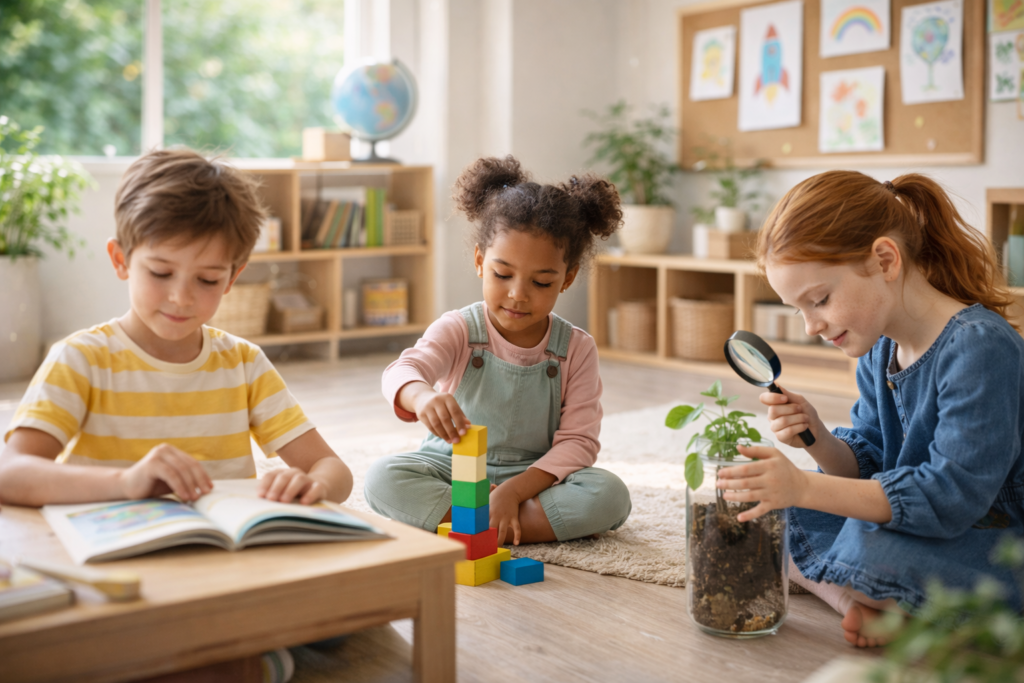
When a child builds a tower of blocks, they are practicing:
- Spatial reasoning
- Trial and error
- Prediction and pattern recognition
When they role-play scenarios, they are practicing:
- Perspective taking
- Narrative construction
- Emotional expression
Play activates multiple areas of the developing brain simultaneously — far beyond what rote memorization can achieve.
Emotional and Social Intelligence Through Play
Play creates safe spaces for children to explore feelings.
During dramatic play, they practice:
- Empathy (understanding others)
- Self-regulation (navigating frustration)
- Cooperation (working with others)
Play teaches children how to handle conflict, how to negotiate, and how to bounce back from disappointment.
These skills are foundational for emotional well-being.
Types of Play That Matter
Not all play is equal.
Here are forms that contribute most to development:
Free Play
Child-led, unstructured play that fosters imagination and autonomy.
Guided Play
Adult-supported but child-directed, combining intention with exploration.
Social Play
Interactive play with peers, building communication and team skills.
Each type offers unique learning opportunities.
The Role of Adults in Children’s Play
Adults are not controllers of play — they are facilitators.
Support play by:
- Providing safe and rich environments
- Offering diverse materials
- Observing before intervening
- Asking curious questions
Examples:
- “What are you building?”
- “What happened next?”
- “How did you solve that?”
These questions enhance thinking without dominating the experience.
Integrating Play Into Daily Life
Even simple activities can be powerful:
- Building forts using household items
- Playing memory or pattern games
- Outdoor exploration and scavenger hunts
- Imaginative role play with props
Play does not need expensive toys — only presence and opportunity.
Closing Reflection
Play is magic not because it is effortless, but because it is essential.
Children do not merely enjoy play — they grow through it.
Play builds:
- Confidence
- Creativity
- Connection
- Communication
When we honor play, we honor the whole child.
🌿 Supporting Child Development with BloomByond
If you are a parent or educator looking to integrate play-based learning and child development strategies into real life, BloomByond offers coaching and programs that strengthen emotional, cognitive and social growth.